

Upskilling in Reverse: What Gen Z Employees Are Teaching Senior Leaders
May 20, 2026 | Leveragai | min read
Gen Z isn’t waiting to be taught. They’re already teaching senior leaders how modern work really works.
Why “reverse” upskilling is suddenly everywhere
For decades, corporate learning moved in one direction. Experience flowed downhill, from senior leaders to early-career employees, reinforced by org charts and training budgets that assumed wisdom only came with tenure. That model didn’t collapse overnight, but it’s no longer holding up under the weight of how quickly work itself has changed.
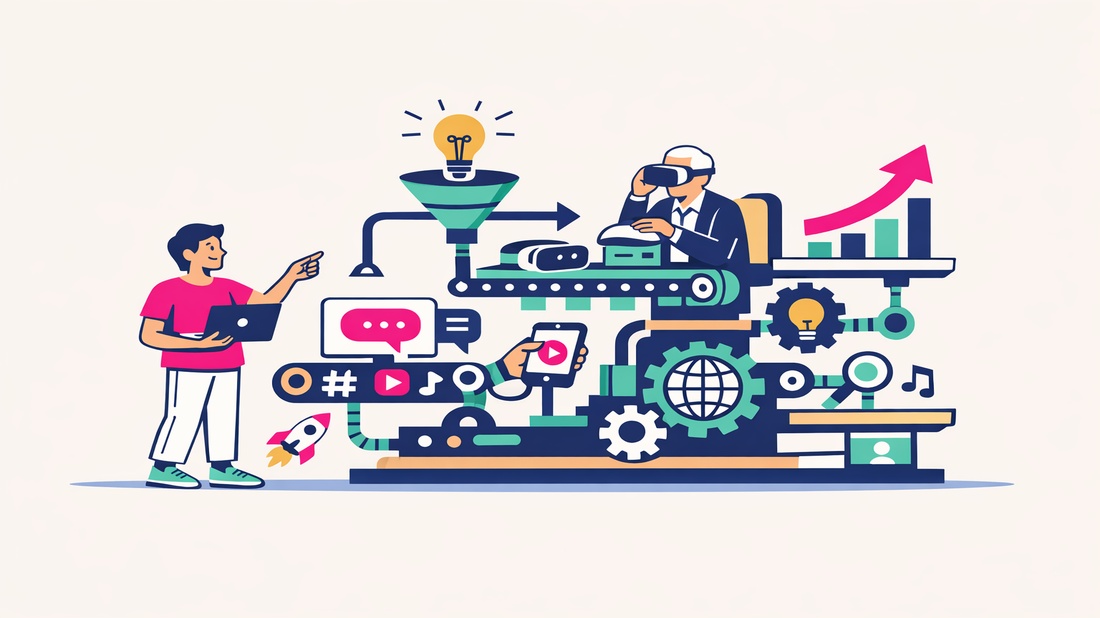
Gen Z entered the workforce fluent in systems many leaders are still trying to interpret. Not just technology, but the social norms of digital work, the expectations around transparency, and the ability to spot when a company’s stated values don’t match its day-to-day behavior. When organizations ignore that knowledge, they don’t just miss out on fresh ideas; they fall behind. That’s why reverse upskilling, often formalized as reverse mentoring, has moved from a novelty HR experiment to a serious leadership development tool.
What’s different now is intent. As highlighted in discussions around two-way learning at IBM, leaders are beginning to see development as reciprocal rather than hierarchical. Gen Z employees expect that partnership, not as a perk, but as a baseline. When senior leaders embrace that expectation, learning accelerates on both sides.
Digital fluency that goes beyond tools
Senior leaders often talk about “keeping up with technology,” but Gen Z’s contribution isn’t limited to explaining new platforms or features. It’s about how digital systems shape behavior, decision-making, and power inside organizations.
Many Gen Z employees instinctively understand how information travels through Slack channels, project boards, and shared documents. They know where work actually happens versus where it’s supposed to happen. That insight matters, because leadership decisions made without it tend to misfire. Policies look sensible in slide decks and fall apart in practice.
There’s also a cultural layer that’s easy to miss. Gen Z is comfortable questioning why a tool exists at all, not just how to use it. They’re quicker to abandon software that adds friction, and more vocal about the cognitive load of poorly designed systems. When leaders listen, they gain a clearer view of where inefficiencies hide and why “digital transformation” stalls even after large investments.
This kind of learning doesn’t show up in traditional executive training. It shows up in conversations, shadowing, and mentorship relationships where leaders are willing to admit what they don’t see.
A sharper read on culture and inclusion
Culture used to be something leaders defined and employees absorbed. Gen Z flipped that dynamic by treating culture as something you participate in, challenge, and reshape in real time. They’re less patient with vague statements about belonging and more attentive to daily signals that reveal who actually has influence.
That sensitivity isn’t theoretical. It comes from growing up in online communities where norms are negotiated constantly and publicly. As a result, Gen Z employees often notice micro-exclusions, unspoken hierarchies, and performative inclusion long before leadership does. When they’re invited to share those observations, leaders gain early warning signals that surveys and annual reviews rarely capture.
Reverse mentoring programs discussed in People Management show how structured conversations around identity, psychological safety, and representation can shift leadership behavior faster than formal DEI training. The learning is personal, sometimes uncomfortable, and far more specific than policy documents.
Senior leaders who engage seriously with this feedback often report a change in how they communicate. Language becomes clearer. Decisions are explained more openly. Trust improves, not because leaders are trying to impress younger employees, but because they’re responding to real, lived experiences inside their own organizations.
New expectations around feedback and growth
One of the clearest lessons Gen Z teaches leaders is that development isn’t a once-a-year event. Feedback, for them, is continuous, contextual, and tied directly to learning. Annual performance reviews feel distant and oddly impersonal when compared to the pace at which work evolves.
This expectation challenges leaders who built their careers in systems where feedback was scarce and often loaded with judgment. Gen Z employees tend to ask more questions, request clarity earlier, and expect managers to be active participants in their growth. That can feel demanding until leaders realize it also reduces misalignment and rework.
Research on mentoring Gen Z emphasizes that they see development as a partnership. When leaders adopt that mindset, they often rethink how they coach their teams overall, not just younger employees. Conversations shift from evaluation to problem-solving. Growth becomes something you do together.
Organizations that support this shift with modern learning infrastructure, including platforms like Leveragai that emphasize continuous upskilling, make it easier for leaders to meet those expectations without burning out. The result is a more responsive, human approach to development that benefits every generation.
Redefining what leadership presence looks like
Leadership presence used to mean authority, decisiveness, and a certain emotional distance. Gen Z doesn’t reject those qualities outright, but they add new criteria. Authenticity matters. So does accessibility. Leaders who hide behind titles or jargon lose credibility quickly.
Gen Z employees are comfortable interacting with executives on internal forums, commenting on leadership posts, and asking direct questions in all-hands meetings. That behavior isn’t disrespect; it’s a different understanding of hierarchy. Leaders who learn from it often discover that presence today is less about control and more about clarity.
This shift teaches senior leaders to communicate earlier and more often, even when decisions aren’t final. It encourages them to explain trade-offs rather than announce conclusions. Over time, this approach builds resilience. Teams are better prepared for change because they understand the thinking behind it.
Korn Ferry’s work on reverse mentoring shows that leaders who adapt their presence in this way often see stronger engagement across all age groups. The learning starts with Gen Z, but it doesn’t end there.
How reverse mentoring actually works in practice
Reverse mentoring succeeds or fails based on structure and intent. When it’s treated as symbolic, it fizzles out. When it’s treated as real learning, with time and psychological safety, it becomes one of the most efficient leadership development tools available.
The most effective programs share a few common elements, which consistently appear across case studies and practitioner research:
- Clear expectations on both sides, so Gen Z employees aren’t positioned as spokespersons for an entire generation.
- Training for senior leaders on how to listen without defending or correcting.
- Regular cadence, not ad hoc coffee chats that disappear under calendar pressure.
- Organizational backing that signals this learning is valued, not extracurricular.
These elements matter because they protect the relationship. They allow honest conversations to surface without turning them into performance moments. When leaders model curiosity in these settings, it sends a signal far beyond the mentorship pair.
What senior leaders often learn last—and need most
Perhaps the most uncomfortable lesson Gen Z teaches is that authority no longer guarantees influence. Influence is earned through consistency, transparency, and follow-through. Younger employees watch closely to see whether leaders act on what they say, especially after listening sessions and surveys.
This scrutiny isn’t cynical; it’s practical. Gen Z grew up watching institutions promise change and deliver little. In the workplace, they respond to leaders who close the loop, explain constraints, and admit when something didn’t work. That behavior builds more credibility than polished speeches ever did.
Senior leaders who internalize this lesson often change how they prioritize work. They become more selective about initiatives, more realistic about timelines, and more explicit about trade-offs. In other words, they lead with fewer illusions and more honesty.
The long-term payoff for organizations
Reverse upskilling isn’t about making leaders more popular with Gen Z. It’s about building organizations that can learn at the speed their environment demands. When knowledge flows in multiple directions, blind spots shrink. Decisions improve. Retention stabilizes.
Employees who feel heard are less likely to leave simply to find growth elsewhere, a trend reinforced by data showing younger workers will change jobs if development stalls. Leaders who learn from Gen Z are better equipped to create those pathways internally, rather than reacting after talent walks out the door.
Over time, this approach reshapes leadership pipelines. Future leaders emerge with a more nuanced understanding of power, communication, and learning. They’re less attached to rigid hierarchies and more comfortable navigating complexity.
Conclusion
Upskilling in reverse isn’t a slogan or a generational concession. It’s a recognition that expertise today is distributed, contextual, and constantly evolving. Gen Z employees bring lived knowledge of modern work that senior leaders can’t afford to ignore.
When leaders listen with intent and organizations support two-way learning through thoughtful structures and tools, everyone grows faster. Not because experience stops mattering, but because it finally has a conversation partner.
Ready to create your own course?
Join thousands of professionals creating interactive courses in minutes with AI. No credit card required.
Start Building for Free →