

5 Signs Your Corporate Training Program Needs an AI Upgrade
April 14, 2026 | Leveragai | min read
If your training feels expensive, slow, or disconnected from real work, AI may be the missing layer. Here’s how to tell when it’s time to upgrade.
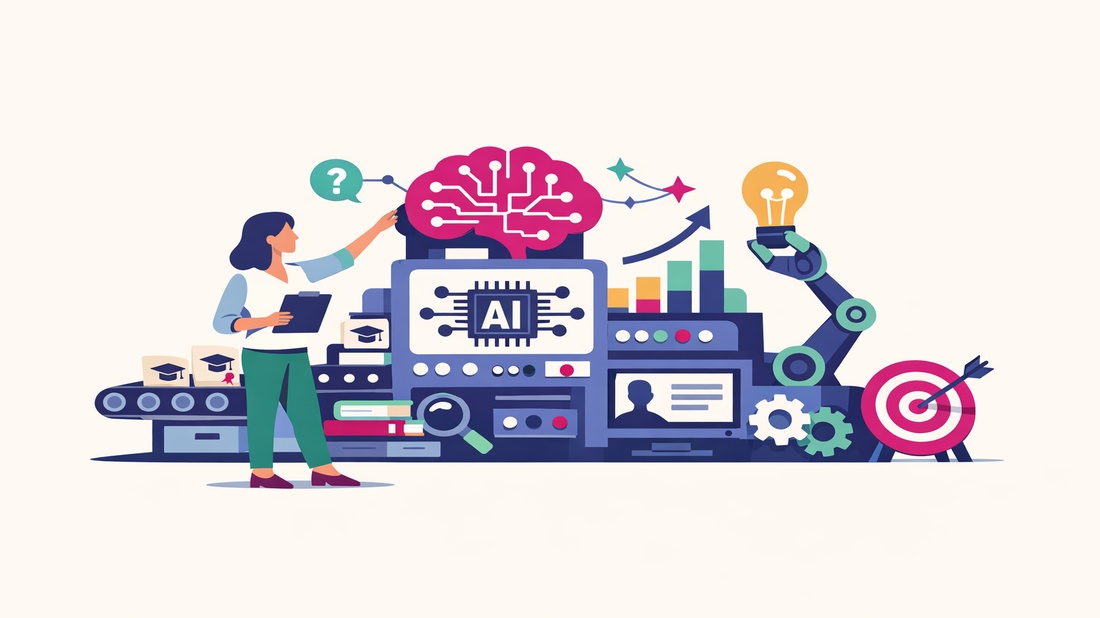
Corporate training rarely fails all at once. It drifts. Content that once felt current starts to lag behind daily work. Completion rates hold steady, but impact quietly erodes. Leaders sense something is off, yet the dashboards still show green.
AI doesn’t fix bad strategy or unclear goals. What it does is remove friction that traditional training models have quietly normalized: one-size-fits-all content, delayed feedback, and guesswork about what actually works. If you recognize the signs below, your program isn’t broken—but it is constrained by tools that no longer match how people learn or how businesses operate.
1. Your Training Treats Everyone the Same
Most corporate learning platforms still assume a shared starting line. New hires, high performers, and career switchers all sit through identical modules, in the same order, at the same pace. The result is predictable. Some people are bored. Others are lost. Almost everyone is inefficient.
This uniformity often comes from good intentions. Standardization feels fair and manageable. But it ignores a basic truth: adults learn best when material connects directly to what they already know and what they need next. When training doesn’t adapt, employees compensate by skimming, multitasking, or postponing completion until reminders pile up.
AI-enabled training platforms change this dynamic by responding to the learner in real time. They adjust difficulty, sequence, and depth based on performance and behavior, not assumptions. Over time, the system builds a learning profile that makes future training faster and more relevant, without requiring manual curation from L&D teams.
You can usually tell personalization is missing when these patterns keep repeating across teams:
- High variance in completion time with no correlation to outcomes.
- Advanced employees disengaging early while beginners stall.
- Managers supplementing formal training with ad hoc explanations.
- Feedback that courses are either “too basic” or “too dense.”
An AI upgrade doesn’t mean abandoning shared standards. It means delivering those standards through paths that respect individual context, something platforms built by teams like Leveragai are designed to do at scale.
2. You Can’t Tie Training to Performance with Confidence
Ask three stakeholders whether a flagship training program “worked” and you’ll often get three different answers. Completion rates look healthy. Post-course surveys are politely positive. Yet performance metrics don’t move, or worse, they improve in ways that can’t be credibly linked back to the training.
This gap exists because traditional learning analytics focus on activity, not impact. Time spent, modules completed, quiz scores. These are easy to track and comforting to report, but they say little about whether someone can actually apply what they learned under pressure.
AI introduces a different layer of visibility. By analyzing patterns across assessments, simulations, on-the-job signals, and even language used in responses, AI systems can infer readiness and skill transfer. The value isn’t just richer data; it’s faster feedback loops. When a module isn’t landing, you see it early. When a concept sticks, you can reinforce it deliberately.
Without this capability, organizations fall back on proxies and anecdotes. Leaders grow skeptical. Budgets tighten. Training becomes an easy line item to question because its value feels abstract.
If your current reporting leaves you defending learning spend rather than guiding decisions with it, that’s a strong signal. AI won’t magically prove ROI, but it does give you evidence that’s closer to how work actually happens.
3. Content Updates Lag Behind the Business
Every organization changes faster than its training library. New tools roll out. Policies shift. Regulations evolve. Meanwhile, course updates wait for quarterly reviews, vendor timelines, or overextended subject-matter experts.
The risk here isn’t just outdated slides. It’s misalignment. Employees follow procedures that no longer match reality. Managers correct behavior informally, creating inconsistency. Compliance teams worry about exposure because the “official” training no longer reflects current requirements.
AI-assisted content workflows compress this cycle. Draft updates can be generated, reviewed, and contextualized quickly, with human oversight focused where it matters most. More importantly, AI can surface which content actually needs updating by detecting confusion patterns or recurring errors in learner interactions.
This becomes especially relevant in regulated environments, where laws and standards continue to evolve. Training that can’t keep pace creates silent risk. AI doesn’t replace legal or compliance judgment, but it does reduce the lag between change and education.
If your teams routinely say, “Ignore that part, it’s outdated,” your training infrastructure is signaling for an upgrade.
4. Trainers and Managers Are Stuck in Administrative Work
L&D professionals rarely choose their field to spend hours chasing completions, formatting reports, or answering the same procedural questions. Yet in many organizations, that’s exactly where their time goes.
This administrative drag has a compounding effect. When trainers are buried in logistics, they have less capacity to coach, design better experiences, or partner with the business. Managers, meanwhile, become reluctant extensions of the system, nudging employees to finish courses rather than discussing how to apply them.
AI can absorb much of this invisible labor. Automated nudges adapt to individual behavior. Common questions are answered instantly and consistently. Reporting updates itself in language stakeholders actually understand. The goal isn’t efficiency for its own sake; it’s reclaiming human attention for higher-value work.
The shift is noticeable when L&D conversations move away from “Did they complete it?” toward “What’s getting in their way?” If your team feels perpetually busy but strategically sidelined, the problem may not be headcount. It may be tooling that was never designed for scale or nuance.
5. Learners Expect AI Everywhere Else—and Not in Training
Employees don’t learn in a vacuum. They use AI tools to draft emails, analyze data, and troubleshoot problems in real time. Outside of work, recommendation systems shape how they consume information every day. Against that backdrop, static training modules feel strangely out of place.
This mismatch erodes credibility. When learning environments lag behind the tools people actually use, training starts to feel performative rather than practical. Engagement drops, not because employees dislike learning, but because the experience doesn’t respect their reality.
Modern AI-enabled training meets learners where they are. It allows questions in natural language. It offers examples drawn from the learner’s role. It provides feedback when curiosity strikes, not days later in a scheduled session. Over time, training becomes less of an event and more of an accessible layer of support.
Organizations that ignore this shift risk more than low engagement. They risk signaling that learning is separate from real work, rather than integrated with it. That’s a hard message to walk back.
What an AI Upgrade Actually Looks Like
An AI upgrade doesn’t mean bolting a chatbot onto an old LMS and calling it progress. It’s a structural change in how learning is designed, delivered, and measured. In practice, that often includes:
- Adaptive learning paths that respond to individual performance.
- Continuous content improvement informed by learner behavior.
- Analytics that connect learning signals to business outcomes.
- Tools that reduce administrative load for trainers and managers.
Platforms like those developed by Leveragai focus on these fundamentals, not novelty. The point is to make training quieter and more effective, not louder and more complex.
Conclusion
Corporate training doesn’t need more content. It needs better alignment with how people learn and how organizations change. The signs that something is off are usually subtle at first, but they compound quickly: disengagement, skepticism, inefficiency, and missed opportunities to build real capability.
AI isn’t a silver bullet, and it shouldn’t be treated as one. But when used thoughtfully, it removes constraints that have limited training for years. If you’re seeing these signals across your organization, an AI upgrade isn’t about staying current. It’s about restoring trust that learning time is time well spent.
Ready to create your own course?
Join thousands of professionals creating interactive courses in minutes with AI. No credit card required.
Start Building for Free →